Is God moving again? How to recognize real revival — and make room for it.
Let me tell you what is happening in Liberia, West Africa, right now.
Last November, about 400 believers gathered from across that country for evangelism training. Out of that group, 28 young men and women were equipped to take the gospel into schools and colleges. Through this year, town by town and school by school, they went. CBN News reported this month that 45,000 students have made decisions to follow Jesus.
I want to be honest about that number, because honesty matters when we talk about the things of God. That 45,000 is the ministry’s own count. It has not been independently audited. But something is happening in Liberia — and Liberia is not the only place.
This is not about the word “revival” on a church sign, and it is not nostalgia for something our grandparents talked about. This is about real revival, today. Is God moving? And if He is, what does it actually look like? Because if we cannot recognize it, we might miss it. And if we call everything revival, the word stops meaning anything.
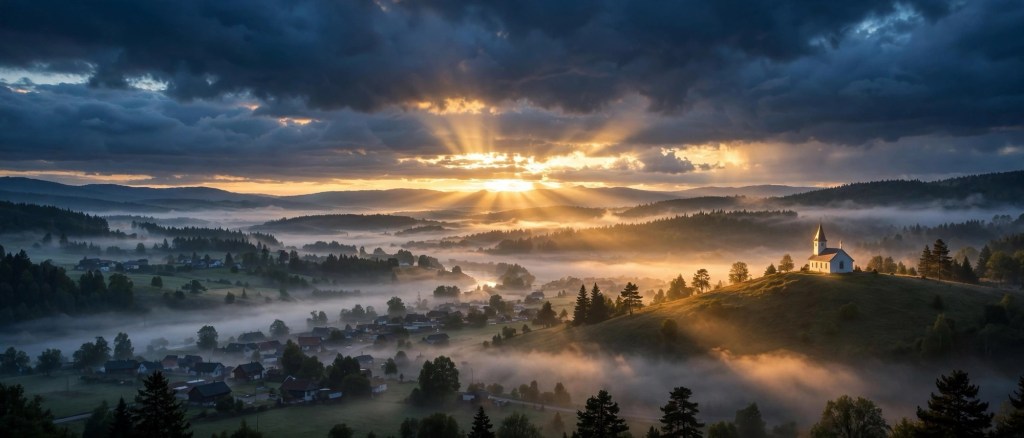
A great light in dark days
The people that walked in darkness have seen a great light: they that dwell in the land of the shadow of death, upon them hath the light shined. — Isaiah 9:2 (KJV)
Isaiah was speaking to people living in dark days — political darkness, spiritual darkness, days when it felt like God had gone quiet. Into that darkness, God did not send a committee. He sent light. A great light.
Notice this: the light came to people who were walking in darkness. They did not climb out of the dark and then find the light. The light found them.
Look at our days. Young people drowning in screens and loneliness. Addiction emptying homes. Families fractured. A whole generation was told faith was dead — and discovered that everything else was emptier. That is darkness. And I believe a light is dawning.
What is actually being reported today
Here is what is being reported, kept straight:
United States campuses: the UniteUS campus movement has now reached over 100,000 students since 2023. At Appalachian State this fall, more than 700 students made decisions for Christ and 100 were baptized.
Around the world: on a single day in May, an initiative called Baptize the World reported over 17,900 baptisms across 49 countries. One church in Jacksonville, Florida, baptized over 2,500 people at a beach service.
France: the Bishops’ Conference reported over 13,000 adult baptisms this year, up 28 percent — more than triple what it was a decade ago — and 42 percent of those baptized were between 18 and 25 years old.
Young churchgoers: Barna’s research found something nobody expected. Among Americans who attend church, the youngest adults are now the most regular attenders. Gen Z churchgoers attend nearly two weekends a month, almost double what they attended in 2020.
Here is the other side, and I will not hide it from you. Pew and PRRI, the big survey houses, say overall church attendance in America is flat, not growing. About a third of adults attend monthly. A quarter attend weekly. The twenty-year freefall has stopped, but the national numbers have not surged.
So I am not going to tell you America is in the middle of a finished revival. What I will tell you is this: the bleeding has stopped, the young are stirring, and light is breaking in places nobody predicted. That brings us to our second scripture.
More and more unto the perfect day
But the path of the just is as the shining light, that shineth more and more unto the perfect day. — Proverbs 4:18 (KJV)
Revival is not noon on the first day. It is dawn.
The light shines more and more. If you are looking for the perfect day before you will believe God is moving, you will miss the sunrise. What we are seeing today may be the early light. Our job is to recognize it, make room for it, and pray it brighter.
So how do you recognize real revival? Not hype. Not emotion. Not a crowd. Here are five marks. Test everything you hear about revival against these five.
1. Holy Spirit drawing
The first mark of revival is the Holy Spirit drawing people. Real revival starts with God, not with us. Jesus said no one comes to Him unless the Father draws them. In revival, that drawing becomes almost visible. People who had no interest in spiritual things suddenly cannot stay away. They show up. They weep. They ask questions they never asked before.
Duncan Campbell, who led the Hebrides Revival in Scotland in 1949, said something I have never forgotten. He said 75 percent of the people were gloriously saved before they ever came near a meeting. The power of God was moving in homes, in fields, and on roads, before anybody preached a sermon.
That is the drawing of the Spirit. You cannot manufacture it. You cannot market it. But you can make room for it. And when God starts drawing people in your town, the worst thing you can do is get in the way with business as usual.
2. Saturation of prayer
The second mark is saturation of prayer. Every true revival in history was born in a prayer meeting before it ever reached a pulpit. The Hebrides Revival started with two elderly sisters, Peggy and Christine Smith — one 82 and blind, the other 84 and bent over with arthritis — praying in a cottage and asking God to show mercy to their island. They prayed until heaven answered.
No man is greater than his prayer life. The pastor who is not praying is playing; the people who are not praying are straying. — Leonard Ravenhill, Why Revival Tarries
Here is the test for your church, and for your own life. Not, do you have a prayer list? But, are you saturated? Is prayer the atmosphere, or only the appointment? Revival does not come to churches that pray about revival. It comes to churches that pray until revival comes.
3. Mournful repentance
The third mark is mournful repentance. In revival, people do not just feel bad about getting caught. They grieve over sin itself. The Bible calls it godly sorrow, and it produces repentance that does not need to be apologized for.
Charles Finney, who preached through the Second Great Awakening, defined revival as a new beginning of obedience to God. Not a new feeling. Not a new experience. A new beginning of obedience.
In the Welsh Revival of 1904, a young coal miner named Evan Roberts prayed a prayer that became the heartbeat of the whole movement. Three words:
“Bend me, O Lord.”
Bend me. Break me. Have Your way with me. That is mournful repentance. It is not asking God to bend the other person. It is you asking Him to bend you.
If what you are calling revival has no tears over sin, no making things right, and no turning around, it is not revival yet. It might be excitement. Excitement fades. Repentance remains.
4. Supernatural faith
The fourth mark is supernatural faith. Revival faith believes God for what looks impossible, and then acts like it believes it. Ordinary people start praying prayers too big for them. They start stepping into places they have no business stepping into, because God sent them.
Think about Liberia again. Twenty-eight young people looked at the schools of an entire nation and believed God for them. That is not strategic planning. That is supernatural faith.
Give me one hundred preachers who fear nothing but sin and desire nothing but God, and I care not a straw whether they be clergymen or laymen; such alone will shake the gates of hell and set up the kingdom of heaven on earth. — John Wesley
One hundred people who fear nothing but sin. That is the arithmetic of revival. It has never been about how many. It has always been about how surrendered. Supernatural faith moves a person from “somebody ought to do something” to “by God’s grace, I will.”
5. Ultimate transformation
The fifth mark is ultimate transformation. Real revival does not end at the altar. It walks out the door and changes the town. In the Hebrides, bars closed. Crime stopped. Work stopped, because people were under such conviction they could not carry on as usual. The whole community felt it.
Revival is a community saturated with God. — Duncan Campbell
That is the final test, and it is the one that takes time. Not how many hands were raised, but what the town looks like a year later. Are marriages healing? Are addicts free — and staying free? Are young converts being discipled, or were they counted and forgotten?
In Liberia, the reason I take the story seriously is the second half of it: the ministry pairs every evangelistic push with discipleship and follow-up. Decisions matter. Disciples last.
Transformation is the fruit. Everything else is the flower. Flowers are beautiful, but fruit is the point.
Three questions to leave with
1. Am I praying like revival depends on it? Not praying about it — praying until it comes.
2. Am I bent? Have I prayed Evan Roberts’ prayer lately, and meant it? Bend me, O Lord.
3. Am I available? God has always chosen ordinary people. The 28 in Liberia were ordinary. The two sisters in the cottage were ordinary. The hundred preachers Wesley dreamed about were ordinary people who feared nothing but sin. You are ordinary. That qualifies you.
D.L. Moody once heard a preacher say, “The world has yet to see what God can do with a man fully consecrated to Him.” Moody went home and said, “By God’s grace, I will be that man.” The world is still waiting to see it. Maybe it is waiting on you.
The people that walked in darkness have seen a great light. The path of the just shines more and more unto the perfect day. The light is dawning, friend. The question is not whether God can send revival. The question is whether we will make room for it.


Leave a Reply